The EU Customs Truths Most US Shopify Brands Only Discover After Their First Disaster
EU customs isn't just paperwork — it's a system designed to catch underprepared sellers at the worst possible moment. Most US Shopify brands learn the hard way that what worked for US domestic fulfillment will actively work against them in Europe. Here's what nobody tells you before you ship your first pallet.
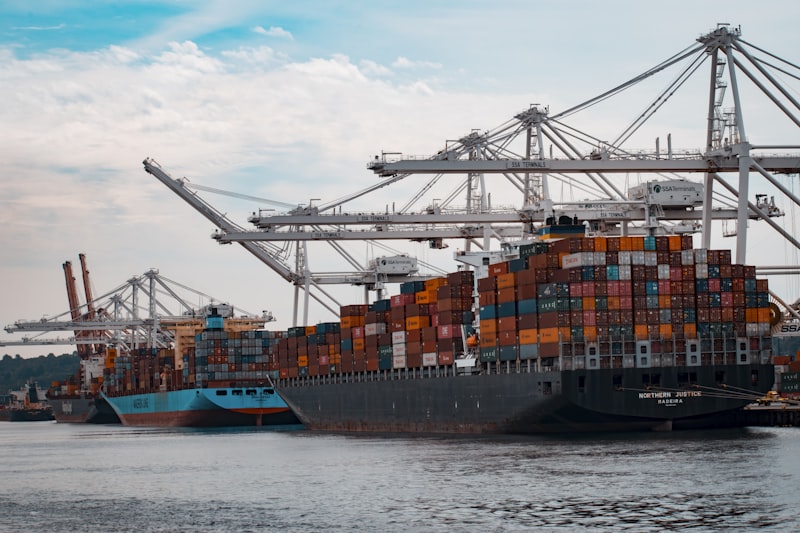
Picture this: you've spent three months preparing your EU launch. Your Shopify store is localized, your ads are live, and your first big shipment is sitting at Rotterdam port. Then it stops. A customs hold. Wrong tariff codes, missing EORI registration, VAT not set up correctly. Your customers are waiting. Your inventory is aging. And every day costs you money you didn't budget for.
This isn't a hypothetical. It's the single most common story we hear from US brands who tried to enter the EU on their own — or trusted a domestic 3PL to figure it out for them. EU customs is not an administrative formality. It is a structured compliance system that will actively punish gaps in your preparation, and it has just gotten significantly more expensive to get wrong.
Effective July 1, 2026, the EU is eliminating its €150 de minimis exemption and replacing it with a flat €3 customs duty per item on low-value parcels. That means even your smallest, cheapest orders — the ones you assumed would slip through duty-free — now carry a per-item charge at the border. For brands shipping high volumes of lower-priced SKUs, this isn't a rounding error. It's a structural cost that needs to be priced into every landed cost calculation before you go live.
Here's what else nobody is telling you before you launch.
The EORI and IOSS Gap That Silently Kills Your First Shipment
Most US Shopify brands know they need to register for VAT in the EU. Fewer know they also need an Economic Operators Registration and Identification (EORI) number before they can clear customs at all. And almost none realize that an EORI obtained in one EU member state doesn't automatically grant you authority to declare goods in another. If you're shipping into Germany but your EORI is registered in Ireland, you may face unexpected friction at the border.
Then there's IOSS — the Import One-Stop Shop. This is the EU's VAT simplification scheme for e-commerce, designed so you collect and remit VAT at the point of sale rather than at the border. It's genuinely useful. But here's what the guides leave out: IOSS only covers goods valued under €150 per consignment, and it only covers VAT — not the new €3 customs duty that takes effect July 1, 2026. That duty applies separately, and it's charged per item based on tariff classification, not per parcel. If your shipment contains multiple line items across different tariff categories, each one may trigger its own charge.
The EU Commission's June 2, 2026 guidance notes confirmed that the new levy will cover approximately 93% of e-commerce imports and will be charged in a way that requires accurate, item-level tariff classification. If you've been treating your customs declarations as a bulk exercise — one code per box — you're about to run into a very expensive correction.
What this means practically: your IOSS registration, your EORI, and your tariff classification system all need to be in place, tested, and aligned with each other before you ship a single unit. Missing one layer creates cascading delays at customs that can hold entire shipments for days or weeks.
Tariff Classification Is Not a One-Time Task
Here's the thing about HS codes — the 10-digit tariff classification codes that determine duty rates at EU borders. Most brands assign them once during setup and then never revisit them. That's a mistake, and it's one that compounds over time.
Tariff classifications change. The EU updates its Combined Nomenclature annually. A code that was valid for your product category in 2024 may have been revised, split, or reclassified by 2026. If your customs broker or 3PL hasn't been actively maintaining your classification database, you may be filing declarations with outdated codes — which triggers holds, penalties, and retroactive duty assessments.
There's also the issue of product evolution. If you've launched new SKUs, changed materials, or bundled products since your original classification was done, those changes can shift your duty category entirely. A jacket with a new lining material might move from one duty bracket to another. A supplement that changed its primary active ingredient may require reclassification under EU product regulations that go beyond customs entirely — into CE marking, REACH compliance, or food safety frameworks depending on your category.
For apparel, homeware, and consumer electronics brands in particular, this is not theoretical. These are the categories most affected by the EU's ongoing regulatory updates, and they're also the categories most affected by the 2026 carrier rate increases from UPS and FedEx — where real-world shipping cost increases for voluminous, lightweight goods are running 8–12% above the headline 5.9% General Rate Increase announced by both carriers. When your customs costs and your carrier costs are both moving simultaneously, a static logistics setup will leak margin from every direction.
Your Fulfillment Location Determines Your Customs Liability — Not Your Shopify Address
This is the one that surprises even sophisticated brands. When you sell to a customer in France from a warehouse in the Netherlands, the customs treatment of that order — including who bears the import duty, how VAT is applied, and which regulations govern the transaction — is determined by where your goods physically enter the EU and where they're physically stored, not by your company address or your Shopify storefront's registered jurisdiction.
Most US brands try to solve this by shipping directly from the US to each EU customer via an express carrier like DHL. This is sometimes called Delivery Duty Paid (DDP) shipping, and it works — but it's expensive, it gives you no buffer for demand spikes, and it means every single order crosses a border individually. Under the new €3 per-item duty regime starting July 1, 2026, every one of those individual shipments will carry its own charge at the item level.
The alternative — and the model that brands who've successfully scaled in the EU almost universally use — is to clear customs once at the point of EU entry, store goods inside the EU at a bonded or standard warehouse, and fulfill domestically from there. This gives you one customs clearance event instead of thousands, it dramatically speeds up delivery times for EU customers, and it positions your inventory inside the EU's VAT system in a way that's far simpler to manage. It also means your landed cost is fixed and predictable, not subject to per-shipment variation based on which carrier your customer's local postal network uses for last-mile delivery.
The catch is that you need a fulfillment partner with actual EU infrastructure — not a US 3PL with a forwarding agreement. And you need that partner to be actively monitoring compliance changes, not just processing your outbound orders.
How SPS Fulfillment Handles EU Customs So Your Brand Doesn't Have To
SPS Fulfillment is an Agentic 4PL — which means we don't own warehouses or trucks. We own the intelligence layer that sits above them. We've built a network of vetted EU logistics partners, customs brokers, and fulfillment operators, and we deploy AI agents to monitor that network in real time — tracking partner performance, flagging compliance gaps, and identifying cost anomalies before they turn into shipment delays or margin leaks.
This matters for EU customs specifically because the compliance landscape doesn't sit still. The July 1, 2026 de minimis change is the biggest structural shift in EU e-commerce customs in years, but it won't be the last. The EU's customs reform agenda is ongoing, IOSS rules are being reviewed, and individual member states frequently introduce their own packaging, labeling, and product safety requirements on top of the EU-wide framework. A static setup — one customs agent, one set of codes, one IOSS filing process — will fall behind. A self-healing supply chain, where agents continuously validate classifications, monitor regulatory updates, and escalate anomalies to human specialists, is what keeps your EU operation running without intervention from your team.
We've fulfilled over 30,000 packages for 150+ brands across the EU, scaling from zero to $500K+ in gross transaction value without external funding. The brands in our network aren't managing customs from their Shopify dashboard. They're selling. We handle the rest.
3PLs scale by hiring. SPS scales by deploying agents. When a new customs rule drops at 11pm Brussels time, our system updates. You don't get a call. You get continuity.
Frequently Asked Questions
Do I need to register for VAT in every EU country I sell into?
Not necessarily. The IOSS scheme allows you to register once and remit VAT on B2C sales across all 27 EU member states through a single return, as long as your goods are valued under €150 per consignment. For higher-value shipments or B2B sales, you'll need country-specific VAT registration in the markets where you have either physical stock or a defined sales threshold. The thresholds vary by country and have changed significantly since the 2021 OSS/IOSS reform. Always confirm current rules with a specialist before you file.
What happens if I use the wrong HS code on my EU customs declaration?
Customs authorities can hold your shipment for inspection, assess back duties at the correct rate (plus interest), and in cases of systematic misclassification, issue penalties. For high-volume shippers, a wrongly classified code doesn't just affect one shipment — it creates a pattern that customs authorities can use to audit your previous declarations. Proactive classification maintenance is far cheaper than reactive correction.
Is it better to ship DDP from the US or store goods inside the EU?
For brands doing meaningful EU volume — even a few hundred orders per month — pre-positioning inventory inside the EU almost always wins on both cost and customer experience. DDP direct shipping works for small volumes or market testing, but it exposes every order to per-shipment customs handling fees, slower delivery windows, and carrier surcharges that are particularly punishing for lightweight or voluminous products. Once you're generating consistent EU demand, in-region fulfillment is almost always the right structural answer.
What does the new €3 EU customs duty mean for my pricing?
It means your landed cost for EU shipments just went up on virtually every order under €150. The €3 charge applies per item based on tariff classification, so a single parcel containing three different SKUs in three different tariff categories could trigger three separate €3 charges. You need to model this against your current EU pricing, your margin targets, and your average order value before July 1. Brands that don't reprice will quietly absorb a cost that compounds with every shipment.
Ready to Build an EU Customs Strategy That Actually Holds Up?
The brands that succeed in the EU aren't the ones with the lowest shipping rates or the most optimistic revenue projections. They're the ones who got their compliance infrastructure right before their first shipment cleared customs — and who built it on a system that updates when the rules change, not three months after.
SPS Fulfillment has the network, the intelligence layer, and the track record to get US Shopify brands into the EU without the customs disasters. If you're planning a launch before July 1 or rebuilding your strategy around the new de minimis rules, start the conversation now at spsfulfillment.com.
Published June 16, 2026 · 16:00
All articles