Ocean Freight Just Hit a 22-Month High — Here's the Hidden Cost Math Wrecking Your Margins
Between surging container rates, resumed Red Sea attacks, and the permanent death of de minimis, US e-commerce brands are absorbing cost increases they can't even see on an invoice. Here's where the money is actually leaking — and how an Agentic 4PL closes the gaps.
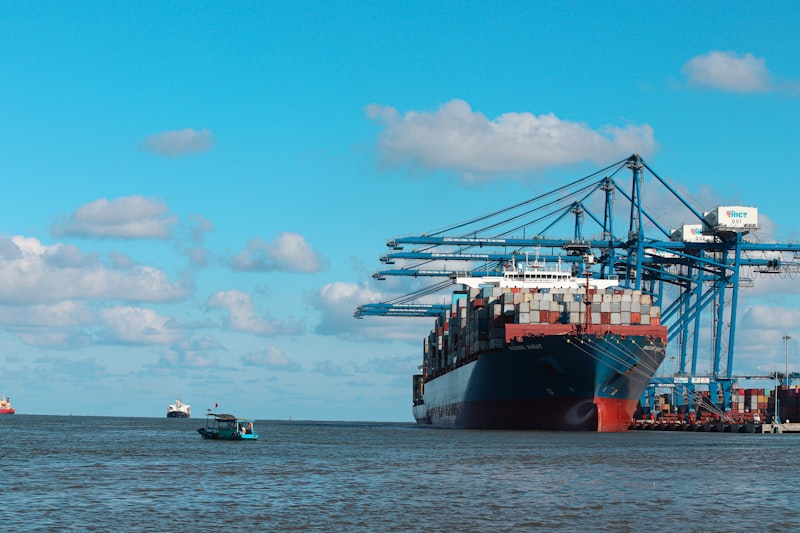
If your landed cost per unit looks the same as it did in January, check your math again. The Drewry World Container Index just hit $4,639 per FEU — a 22-month high — as Houthi attacks on Red Sea shipping resumed in late July, pushing carriers back onto longer Cape of Good Hope routes and squeezing capacity right as Asian factories ramp up for peak season. Layer on the fact that the $800 de minimis exemption is now permanently gone, codified into federal regulation as of June 24, 2026, and most US Shopify brands are quietly absorbing a cost stack they never budgeted for. The problem isn't one big line item. It's a dozen small ones your 3PL never bothers to explain — and they compound every single shipment.
The New Freight Math: Why Rates Spiking Now Hits Harder Than Usual
Container rate spikes aren't new, but this one is different because it's colliding with two other structural shifts at once: a hard capacity crunch from Red Sea rerouting, and a compliance cost increase from de minimis suspension that's already inflating per-unit customs costs. Vessels diverting around the Cape instead of through Suez add 10–14 days of transit time per voyage, which means fewer round trips per quarter and tighter available capacity heading into Q4 — historically the moment US brands need the most container space, not the least.
The knock-on effect analysts are already flagging: overlapping arrival waves at US and EU ports, inland congestion, and container shortages at Asian origins appearing roughly eight to nine weeks after the disruption began. For a brand planning October and November inventory right now, that timeline lands directly on top of your peak season restock. If you're still booking freight reactively — calling your forwarder when you need a container instead of having a partner monitoring capacity and rate trends continuously — you're going to get quoted the worst rate at the worst time, every time.
The De Minimis Shockwave Nobody Priced Into Their Model
Most brands treated the de minimis suspension as a one-time tariff hit. It isn't. CBP's interim final rules didn't just remove the $800 duty-free threshold — they replaced it with new formal and informal entry procedures, bonding requirements, and documentation standards for shipments that used to clear customs with almost no friction. Every parcel that used to sail through as an $800-or-under exemption now needs a broker, a bond, and a compliance process behind it.
That means brands are now paying for: broker fees per entry, bonding costs, increased customs clearance time (which shows up as slower delivery and more customer service tickets), and in many cases, duplicate paperwork because their fulfillment partner and their customs partner don't talk to each other. Amazon has already responded by building customs-friendly warehouses near Chinese ports specifically to help sellers stage compliant paperwork before goods ever leave origin. If a trillion-dollar marketplace is restructuring its entire network around this regulatory shift, it should tell you something: this isn't a temporary cost spike to wait out. It's the new baseline, and your fulfillment strategy needs to be built around it permanently.
The Line Items Your 3PL Never Puts on One Invoice
Here's what makes hidden shipping costs so dangerous: they're rarely hidden on purpose. They're just scattered across five different invoices from five different vendors your 3PL manages loosely, if at all.
- Dimensional weight reclassification — carriers requoting based on package dimensions instead of actual weight, often after the shipment has already left the warehouse.
- Peak season surcharges — layered on top of already-inflated ocean and last-mile rates, frequently without advance notice from your 3PL.
- Customs brokerage and bonding fees — now mandatory on shipments that used to be exempt, and billed separately from your core fulfillment invoice.
- Accessorial fees — address corrections, residential surcharges, storage overages — the line items most brands never audit because they arrive buried in a monthly statement.
- Idle inventory carrying costs — capital tied up in warehouse space you're paying for regardless of whether that stock is moving or dead weight.
Individually, each of these looks small. Stacked across 10,000 monthly shipments during a freight rate spike and a customs regime change, they can quietly erode 8–15% of your margin — and most finance teams don't catch it until the quarterly numbers come in soft.
How SPS Solves the Hidden Cost Problem
This is exactly the environment an Agentic 4PL was built for. SPS doesn't own the ships, the trucks, or the warehouses — we own the intelligence layer that sits on top of the entire network, monitoring freight rates, carrier performance, and customs compliance in real time across every partner we orchestrate. When ocean rates spike or a new customs rule goes into effect, our agents don't wait for a quarterly review to flag it. They surface the change the moment it happens and adjust routing, carrier selection, and customs workflows automatically.
Traditional 3PLs scale by hiring more account managers to manually watch these variables — and even the best ones can't monitor every shipment, every surcharge, and every regulatory update in real time. SPS scales by deploying agents. That's the difference between finding out about a dimensional weight reclassification after the invoice lands, and having it flagged and rerouted before the package ever ships. Our customs and import services were built specifically around the post-de-minimis reality: brokers, bonding, and documentation handled as one coordinated process instead of five disconnected vendors billing you separately. And because we don't own the assets, we're not locked into a single ocean carrier or a single customs broker when rates spike — we route through whichever partner in the network is performing best that week, based on live data, not a legacy contract.
The result for the 150+ brands we've already served: landed costs that reflect the actual market, not last quarter's rate card, and a self-healing supply chain that adjusts to disruption instead of absorbing it silently into your margin.
Frequently Asked Questions
Why did ocean freight rates suddenly spike in mid-2026?
A combination of renewed Houthi attacks on Red Sea shipping and general capacity constraints pushed the Drewry World Container Index to a 22-month high of $4,639 per FEU in July 2026. Vessels rerouting around the Cape of Good Hope instead of through Suez are adding 10–14 days of transit time and reducing available capacity industry-wide.
Is the de minimis exemption really gone for good?
As of June 2026, yes — CBP formally codified the suspension into federal regulation through interim final rules rather than leaving it as an executive order, making it far harder to reverse. All shipments under $800 now require formal or informal entry procedures and are subject to duties, taxes, and fees that didn't previously apply.
How much are hidden shipping costs actually costing my brand?
For most brands running through a traditional 3PL, hidden costs from dimensional weight reclassification, peak surcharges, brokerage fees, and accessorial charges can total 8–15% of margin — often invisible until quarterly financials come in below forecast.
How is an Agentic 4PL different from working with a customs broker and a 3PL separately?
Instead of managing multiple disconnected vendors — a freight forwarder, a customs broker, a warehouse operator — an Agentic 4PL orchestrates all of them through one intelligence layer that monitors rates, compliance, and performance in real time, catching cost spikes and routing around them before they hit your invoice.
If your margins are quietly disappearing into freight surcharges and customs fees you didn't see coming, it's time to stop managing five vendors and start working with one network that watches all of them for you. Visit spsfulfillment.com to see how SPS's Agentic 4PL model turns hidden shipping costs into visible, controllable ones — before your Q4 numbers take the hit.
Published July 28, 2026 · 16:00
All articles