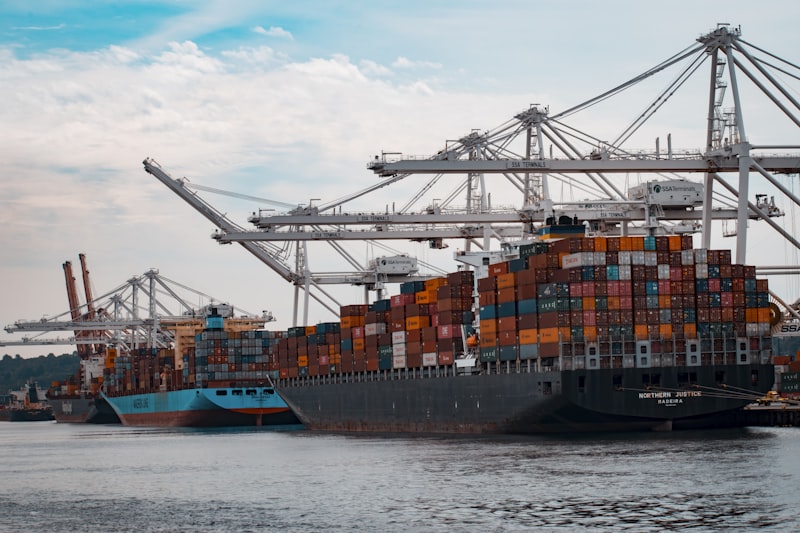
The EU VAT Registration Traps Nobody Tells US Shopify Brands About
Getting your EU customs paperwork right isn't enough if your VAT setup is wrong. Here's what US brands consistently get wrong about IOSS, OSS, and fiscal representatives — and how it quietly destroys margins before a single package ships.
Here's a number that should scare every US Shopify brand eyeing the EU: nearly 30% of first-time EU sellers get their VAT registration wrong in the first six months, according to customs brokers who process EU import declarations daily. Not because the rules are secret. Because everyone talks about customs duties and tariffs, but almost nobody explains the VAT layer sitting underneath it — the one that can freeze your inventory at a border warehouse for weeks while you scramble to fix a registration you didn't know you needed.
US brands obsess over landed cost calculators and duty rates. Meanwhile, the actual operational trap is VAT: which scheme applies to you, who your fiscal representative needs to be, and what happens the moment your EU sales cross a threshold you didn't track. Get this wrong, and it's not a fine — it's stuck goods, angry customers, and a support inbox full of refund requests.
Why VAT Trips Up US Brands More Than Customs Duties
Customs duties are a single, predictable line item. You know the HS code, you know the rate, you can bake it into your landed cost model. VAT is different. It's not a flat fee — it's a registration obligation that varies by where your customer is, where your inventory sits, and how you're selling.
Most US brands assume that because they registered for the Import One-Stop Shop (IOSS) scheme, they're covered. IOSS handles VAT collection on B2C shipments under €150 sold directly from the US. But the moment you start holding inventory in an EU warehouse — which you eventually will, because shipping every order from a US warehouse kills your delivery times and margins — IOSS no longer applies. You now need standard VAT registration in the country where your goods are stored, plus potentially in every country where you're shipping enough volume to trigger local distance-selling thresholds under the EU's One-Stop Shop (OSS) regime.
This is where brands get stuck. They set up a single EU warehouse in, say, the Netherlands, assume that one VAT number covers all EU sales, and don't realize OSS only simplifies the reporting — it doesn't eliminate the need for a local VAT registration in the country of storage. When goods physically sit in a bonded or fiscal warehouse, that country wants its own registration on file, sometimes with a fiscal representative who is jointly liable for your VAT compliance. Miss that, and customs will hold your inbound freight until it's resolved.
The Freight Timing Problem Making This Worse Right Now
This VAT exposure is getting more expensive to ignore because of what's happening in ocean freight. Flexport's latest market update, published August 6, reported that blank sailings — cancelled voyages — are running near an 8% cancellation rate across major East-West trades for the back half of August, with 58 of 723 planned sailings pulled. That kind of capacity tightening pushes brands to front-load larger EU inventory shipments to avoid getting caught in a rate spike or delay window heading into Q4.
But larger, earlier shipments mean more inventory value sitting in an EU bonded warehouse for longer, which means your VAT registration and fiscal representation need to be airtight before that container clears the port — not after. A brand that ships a six-month inventory buffer into the Netherlands in September, without a finalized VAT registration, can find that inventory value tied up in customs limbo while carriers are simultaneously raising rates due to reduced sailing capacity. That's a double hit: freight cost inflation plus a compliance bottleneck, at the exact moment brands are trying to build Q4 buffer stock.
The Real Cost of Getting VAT Wrong
Brands that stumble here usually hit one of three walls. First, inbound freight gets held at customs because the fiscal representative listed on the import declaration doesn't match an active VAT registration — this can add 10 to 20 days of storage fees and demurrage charges nobody budgeted for. Second, brands discover mid-quarter that they've crossed the EU-wide €10,000 distance-selling threshold and now owe VAT filings in multiple countries retroactively, sometimes with penalty interest attached. Third — and this is the quiet killer — brands price their EU listings assuming they'll absorb VAT at one rate, then get hit with a different local rate once OSS filings reconcile, eating 3 to 5 points of margin they never modeled.
None of this shows up in a landed cost spreadsheet built around duty rates alone. It only shows up when a shipment is sitting in a warehouse in Rotterdam and nobody can tell you why it hasn't cleared.
How SPS Solves the VAT and Fiscal Representation Problem
This is exactly the layer where SPS Fulfillment operates differently than a traditional 3PL. SPS is an Agentic 4PL — we don't own the warehouses, the trucks, or the customs brokerage. We own the intelligence layer that sits above the entire network, coordinating fiscal representation, VAT registration timing, and customs clearance so they happen in the right order, before your inventory ever gets stuck at a border.
When a brand works with SPS, our AI agents monitor the compliance status of every shipment in real time — flagging when a VAT registration needs to be finalized before a container departs the US, not after it lands in the EU. We coordinate directly with fiscal representatives and customs partners across our network, so a Netherlands warehouse registration and an OSS filing are synchronized before freight arrives, not reconciled weeks later at a demurrage cost.
This is the core difference between how 3PLs scale and how SPS scales. A traditional 3PL scales by hiring more compliance staff to manually track VAT thresholds per client — slow, expensive, and prone to the exact human error that causes goods to sit in customs limbo. SPS scales by deploying agents that watch registration status, sales thresholds, and freight timing simultaneously across every brand in the network, catching the gap before it becomes a hold. We've already moved over $500K in GTV through our EU operations and fulfilled more than 30,000 packages for 150+ brands — and the single biggest operational win we deliver isn't faster shipping. It's brands never finding out the hard way that their VAT setup was wrong.
Frequently Asked Questions
Do I need a fiscal representative if I'm only using IOSS?
No — IOSS covers direct B2C shipments from the US under €150 and doesn't require a fiscal representative. The moment you store inventory in an EU country, though, IOSS no longer applies, and most countries require a fiscal representative for non-EU businesses holding local VAT registration.
Does OSS mean I only need one VAT number for the whole EU?
OSS simplifies your VAT reporting into a single quarterly filing, but it does not replace the requirement for a local VAT registration in the country where your inventory is physically stored. Many brands mistakenly believe OSS is a full substitute — it isn't.
How long does EU VAT registration actually take?
Timelines vary by country, but four to eight weeks is realistic once you factor in fiscal representative onboarding and local tax authority processing. This is exactly why registration needs to happen before freight departs the US, especially with the current tightening in ocean freight capacity.
What happens if my inventory gets held at customs over a VAT issue?
You'll typically face daily storage and demurrage fees on top of the underlying VAT liability, and resolution can take one to three weeks depending on the country and how quickly the registration gap is closed.
If your EU expansion plan has a customs strategy but no real answer for VAT and fiscal representation, you're building on a foundation that will crack the first time freight volumes spike. SPS Fulfillment's Agentic 4PL model was built to catch exactly this kind of gap before it costs you a shipment. Visit spsfulfillment.com to see how our intelligence layer keeps your EU inventory moving instead of sitting in a warehouse waiting on paperwork.
Published August 11, 2026 · 16:00
All articles