The De Minimis Era Is Over: Why Your US Market Entry Strategy Needs a Rebuild
With de minimis relief gone on both the EU and US sides, the parcel-by-parcel model that let European brands test the US market cheaply no longer works. Here's how to rebuild your entry strategy around bulk import and bonded infrastructure instead.
For nearly a decade, the cheapest way for a European brand to test the US market was to just... ship. Direct-to-consumer parcels under $800 sailed through customs duty-free under the de minimis rule, no importer of record, no bonded warehouse, no formal entry. That era ended this summer. As of July 24, 2026, low-value postal shipments into the US now require a considerably more burdensome entry process, and on July 1 the EU scrapped its own €150 de minimis exemption entirely — meaning every B2C parcel now needs an item-level customs declaration regardless of IOSS status. If your US entry plan was built around drop-shipping parcels straight from a European warehouse, that plan is now structurally broken, and it's worth rebuilding before you scale further.
The Parcel Model Quietly Died — Here's What Replaces It
The old playbook was simple: list on Shopify, ship international, let de minimis absorb the friction. It worked because customs treated each parcel as low-risk and low-value. Now every shipment into the US triggers a formal entry process, and every shipment out of the EU triggers its own declaration. The compliance overhead per parcel has effectively doubled on both ends of the Atlantic.
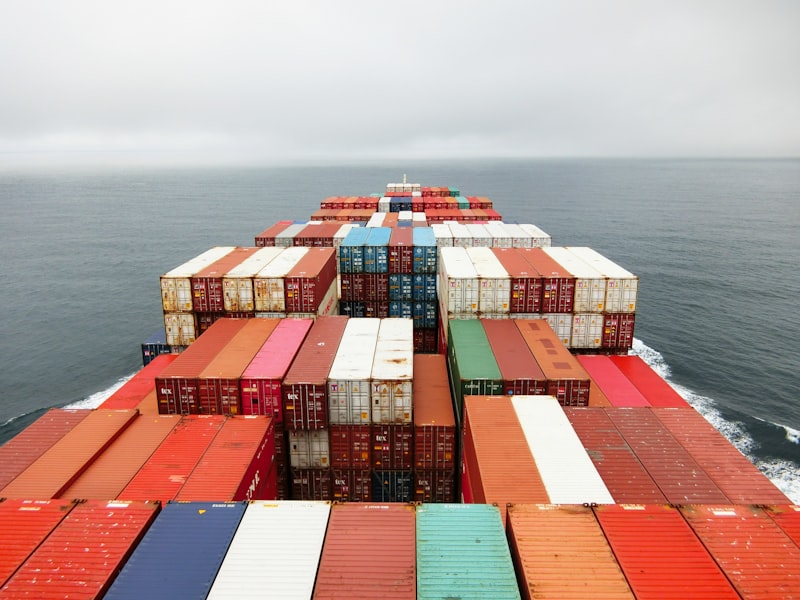
The brands adapting fastest aren't shipping parcel-by-parcel anymore — they're importing in bulk, clearing customs once as a consignment, and fulfilling domestically from US-based inventory. This isn't a minor tweak. It changes your entire cost structure: fewer, larger customs entries instead of thousands of tiny ones, a US-based importer of record, and warehousing that can hold safety stock rather than relying on transatlantic parcel flow for every order. It's a shift from thinking like an exporter to thinking like a domestic US operator — which, if you're serious about the US market, is what you needed to become eventually anyway.
Freight Timing Actually Works in Your Favor Right Now
Here's the silver lining most brands are missing: while customs compliance has gotten heavier, freight costs have not. Ocean freight on Europe-linked lanes has been soft for weeks, with spot rates on Europe trades declining for a fourth consecutive week as of early August and carriers pulling back planned rate hikes. Transpacific lanes are tightening, but Europe-bound capacity remains flat and available. That's a genuine window to move bulk inventory into US warehousing at favorable rates before carriers attempt to push prices back up.
On the parcel side, DHL Express cut fuel surcharges by two percentage points effective August 3 — a rare move against the grain of rising carrier fees industry-wide. It won't offset the new customs burden on its own, but combined with soft ocean rates, this is arguably the best near-term moment in 2026 to reposition inventory into the US before the compliance squeeze fully compounds with a freight cost squeeze.
Why Bonded Warehousing Should Be Part of Your First Move
If you're restructuring around bulk import rather than parcel drop-shipping, bonded warehousing stops being a nice-to-have and becomes the backbone of your entry strategy. Landing a full container into a bonded facility lets you defer duty payment until goods actually move to fulfillment, clear customs as a single consolidated entry instead of hundreds of individual parcel entries, and hold buffer stock so a customs delay doesn't stall your entire US sales channel.
This is also where the EU's de minimis change bites twice: if you're still fulfilling some US orders directly from Europe as overflow, those outbound EU shipments now need their own customs declarations too, adding friction and cost on a route you may have assumed was simple. The practical fix is to stop treating the EU-to-US parcel lane as a fallback and treat US-based bonded inventory as your primary channel, with EU shipping reserved for genuine exceptions.
How SPS Solves the Post-De Minimis Entry Problem
This is precisely the seam where most European brands get stuck — juggling a customs broker, a separate freight forwarder, a bonded warehouse operator, and a fulfillment provider, none of whom talk to each other or take responsibility when a shipment gets held. SPS Fulfillment exists as the intelligence layer that sits above all of it. We don't own the ships, the bonded warehouses, or the last-mile trucks — we own the network and orchestrate the operators who do, so a single contract covers customs clearance, import, freight, warehousing, and fulfillment as one connected system instead of five vendor relationships you have to manage yourself.
That matters more than ever under the new entry rules. When a shipment hits the more burdensome US entry process or gets flagged for additional documentation, our self-healing supply chain reroutes and resolves the issue automatically — rebooking freight, adjusting warehouse allocation, or flagging compliance gaps before they become a stalled container. You're not stuck waiting on hold with a broker while your bonded inventory sits idle and your US sales stall. And when the entry strategy shifts, as it just did, you're not renegotiating five separate contracts to catch up — the orchestration layer adapts underneath you.
For brands carrying excess inventory as they restructure around bulk import, our partnership with ManyCo turns overstock into recovered revenue at zero operational effort, rather than let unsold safety stock quietly erode your margins while you wait for demand to catch up to your new import volumes.
Frequently Asked Questions
Do I still need de minimis relief to sell in the US profitably?
No, but you do need to rebuild your cost model around it being gone. Brands that shift to bulk import and bonded warehousing generally see lower effective duty costs per unit than they feared, because consolidated entries and deferred duty payment through bonded facilities offset the loss of the parcel exemption.
Is now a good time to move inventory into the US, given the freight market?
Based on current conditions, yes. Europe-linked ocean rates have been soft for several consecutive weeks and carriers have held off on rate increases, while transpacific lanes are tightening. That gap won't necessarily last, so brands planning US entry or expansion should treat the next few weeks as a favorable booking window.
Does the EU's de minimis change affect brands that already fulfill entirely from the US?
Not directly for US-bound orders, but it matters if you still ship any returns, exchanges, or overflow inventory back through EU postal channels, or if you sell into the EU from US stock. Every low-value B2C shipment into the EU now needs its own item-level declaration, which adds cost and paperwork you may not have budgeted for.
How long does it take to shift from a parcel-based model to bulk import with bonded warehousing?
Most brands can transition within four to eight weeks if freight, customs, and warehousing are coordinated by a single partner. The delays typically come from juggling separate vendors for each step rather than the underlying logistics itself.
The brands that treat this compliance shift as a forcing function to build proper US infrastructure — rather than patching around it — will be the ones with durable US margins by 2027. If you're rethinking how your inventory gets into the US and want one partner orchestrating customs, freight, warehousing, and fulfillment instead of five, talk to the team at spsfulfillment.com.
Published August 11, 2026 · 16:00
All articles