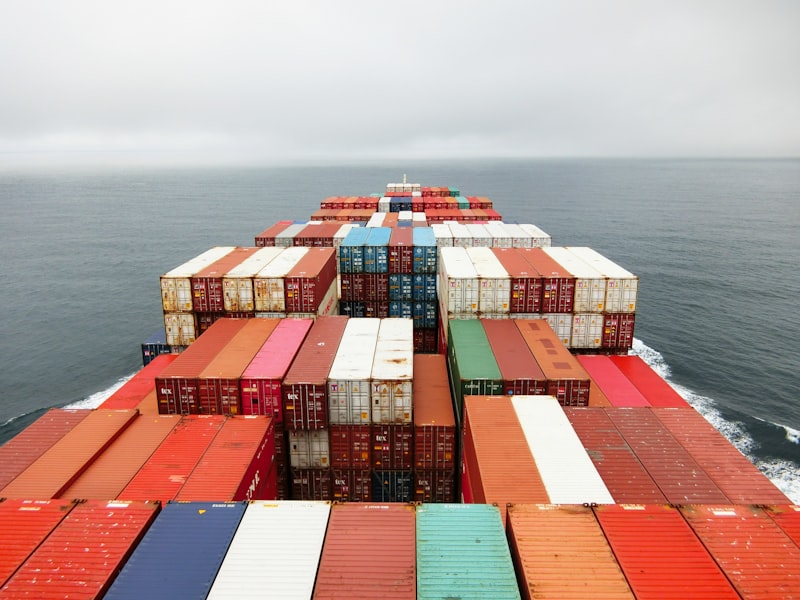
The European Brand's Blueprint for Launching in the US Market
Entering the US isn't a shipping problem — it's a systems problem. This deep-dive walks European e-commerce brands through market validation, legal setup, logistics infrastructure, a realistic first-year P&L, and the mistakes that quietly sink otherwise strong launches.
Roughly 62% of European e-commerce brands that attempt a US launch stall out within the first 18 months — not because the demand wasn't there, but because they treated US expansion as a shipping decision instead of an infrastructure decision. They picked a carrier, filed some paperwork, and shipped a container. Six months later, margins had evaporated into duties nobody budgeted for, returns were piling up in a warehouse three states from anyone who could process them, and customer service was fielding angry emails about customs holds. This guide is the playbook we wish every brand had before their first pallet left the dock. It covers market validation, legal and tax setup, the logistics infrastructure that actually holds up under holiday volume, a realistic year-one budget, and the first-shipment checklist most brands skip.
Why Timing Matters More Than Usual Right Now
US market entry has always had a timing element, but late 2026 is unusually lopsided. Ocean freight into the US has spiked hard heading into peak season — the Shanghai–New York leg is now running close to $9,600 per 40ft container, nearly triple where it sat a year ago, while Shanghai–Los Angeles rates climbed again this week too. At the same time, Europe-bound lanes are going the opposite direction: Asia–Europe spot rates have been sliding since mid-July, with Shanghai–Rotterdam down another 5% and Shanghai–Genoa down 10% in a single week, and forwarders don't expect that to reverse.
Layer onto that the National Retail Federation's read that this year's US import peak season arrived unusually early — retailers front-loaded inventory in June, July, and August to get ahead of tariff changes, which means inbound US freight capacity and pricing may actually ease through Q4 even as headline ocean rates stay elevated. For a European brand timing its first US shipment, that combination — expensive but potentially loosening capacity, paired with a genuine holiday window — makes September through November a narrow but real opportunity to get inventory positioned before the true holiday crunch hits.
Step 1: Market Research and Demand Validation
Before any legal filing or freight booking, you need evidence the US market wants what you're selling — at US price points, under US expectations for delivery speed and returns.
Competitive Landscape Mapping
Search your category on Amazon.com, not Amazon.de or .fr. Pricing, review volume, and delivery promises are entirely different markets. If US competitors in your category offer free 2-day shipping and 60-day returns as table stakes, and your unit economics only support 5-7 day delivery and 14-day returns, you have a positioning problem before you've shipped a single unit.
Regulatory Readiness Check
Certain categories — cosmetics, supplements, electronics, textiles, anything touching children — carry US-specific compliance requirements (FDA registration, FCC certification, CPSIA testing) that have nothing to do with your EU CE marking. Confirm these early; they can add 8-12 weeks to your timeline if discovered late.
Step 2: Legal and Financial Setup
This is the part European founders most often underestimate, largely because it's invisible until it isn't.
Entity Structure
Most European brands entering the US form either a Delaware C-Corp or an LLC, depending on whether they plan to raise US capital later. An LLC is simpler and cheaper for a pure e-commerce operation; a C-Corp makes more sense if venture funding is on the roadmap. Either way, budget $500-$1,500 for formation and registered agent fees, plus ongoing state franchise tax obligations that vary by state.
EIN, Sales Tax, and Nexus
You'll need a US Employer Identification Number (EIN) to open a US bank account, register with a payment processor, and file taxes. Sales tax nexus is the trickier piece: since the 2018 Wayfair ruling, most states require sales tax collection once you cross certain revenue or transaction thresholds in that state — regardless of physical presence. If you're warehousing inventory in multiple states, you likely have nexus in each of them. A tax automation tool (Avalara, TaxJar) is not optional past a certain volume; manual tracking becomes unmanageable fast.
Import of Record and Customs Bond
Someone has to be the legal importer of record for your goods entering the US, and that party is liable for duties, tariffs, and compliance. Many European brands don't realize they can act as their own importer of record with a customs bond (roughly $50,000 continuous bond for most mid-size importers, costing a few hundred dollars annually through a surety), rather than defaulting to whatever their freight forwarder offers. Getting this structure right early avoids costly re-filing later.
Step 3: Building Logistics Infrastructure That Survives Peak Season
This is where most brands make their most expensive mistakes, and it's also where the EU's newly finalized customs reform becomes directly relevant even for brands focused on the US. The Council of the EU has now formally adopted its biggest customs overhaul in decades, introducing an EU-wide handling fee on small parcels from November 1, 2026, on top of the existing €3 flat duty, and formally making non-EU platforms liable as the importer of record for goods sold into the EU. If your brand runs a dual-market model — selling direct into both the EU and US from overlapping inventory pools or fulfillment partners — this reform changes your compliance math on the European side at the exact moment you're trying to stand up US operations. It's another argument for treating each market's logistics as its own system rather than bolting the US onto whatever setup you already run for Europe.
Freight and Customs Brokerage
Decide early whether you're shipping via ocean freight (cheaper per unit, 25-35 day transit, better for steady-state replenishment) or air freight (faster, dramatically more expensive, better for initial launch inventory or fast-moving SKUs). Most brands do a hybrid: air freight for the first 1-2 shipments to get product live fast, ocean freight once demand is validated. Customs brokerage should be handled by a partner who understands your HTS classification and can advocate for the correct duty rate — misclassification is one of the most common (and expensive) errors we see.
Warehousing and Fulfillment Network
Single-warehouse setups feel simpler on paper but create two problems: slow, expensive shipping to customers on the opposite coast, and zero resilience if that one facility hits a delay. A multi-node network — typically East Coast and West Coast to start, adding a central hub as volume grows — cuts average transit time and shipping cost meaningfully, though it does mean more complex inventory allocation. It's worth noting that global carriers are actively investing in exactly this kind of connective infrastructure right now: UPS just committed over $2 billion through 2028 to its international network, including a new Amsterdam facility combining freight, brokerage, and cold-chain under one roof — a sign that the carriers themselves are betting on tighter EU-US logistics integration, which is good news for brands building multi-node US networks with European sourcing.
Returns Pipeline
US consumers return online purchases at nearly double the rate of European shoppers in several categories, particularly apparel. If your returns process routes a US customer's package back across the Atlantic, you're paying international return shipping on top of the original outbound cost, and you're looking at 3-4 weeks before that inventory is sellable again. A domestic US returns node — even a modest one — pays for itself quickly once volume passes a few hundred orders a month.
Because every one of these decisions — warehouse count, carrier mix, customs brokerage model, returns routing — changes your landed cost per unit, it's worth running the numbers before you commit to a network design rather than after. SPS's fulfillment cost calculator lets you model different network configurations against your actual SKU mix and order volume, so you can see the cost impact of a two-node versus three-node setup before you sign a warehouse lease.
Step 4: Your First Shipment Checklist
- Confirm HTS codes and duty rates for every SKU with your customs broker, not your freight forwarder
- Secure a continuous customs bond if you're acting as importer of record
- Verify product labeling meets US requirements (country of origin, care labels, ingredient lists where applicable)
- Confirm your warehouse partner's receiving requirements (carton labeling, ASN format, pallet specs) before goods leave Europe
- Set up sales tax collection in your nexus states before your first US sale, not after
- Test your returns address and process with a handful of orders before scaling
- Build a 10-15% buffer into your landed cost estimate for the inevitable surprise fee
Realistic Year-One Budget
Every brand's numbers differ by category and volume, but here's a directionally realistic breakdown for a brand shipping roughly 15,000-25,000 units in year one:
- Entity formation and legal setup: $3,000-$6,000
- Customs bond and brokerage (annual): $2,000-$5,000
- Initial freight (mixed air/ocean): $15,000-$40,000 depending on category and volume
- Duties and tariffs: highly variable by HTS code, typically 5-25% of goods value, sometimes higher for specific product categories currently subject to elevated tariffs
- Warehousing setup and monthly storage: $1,500-$4,000/month across a two-node network
- Pick, pack, and fulfillment per order: $3.50-$7.50 depending on complexity and network
- Domestic US last-mile shipping: $6-$12 per parcel depending on zone and weight
- Returns processing (per return): $4-$9 domestically versus $15-$25 for cross-border
- Sales tax software and compliance: $1,000-$3,000/year
Add it up and most brands land somewhere between $45,000 and $110,000 in year-one fixed and variable costs before a single unit of paid advertising, which is why the brands who succeed treat the first 90 days as a controlled pilot rather than a full-scale launch.
Timeline: What to Expect
- Weeks 1-4: Entity formation, EIN application, market research, HTS classification review
- Weeks 4-8: Customs bond setup, warehouse partner selection, sales tax registration in initial nexus states
- Weeks 8-12: First shipment production and freight booking, product listing and compliance finalization
- Weeks 12-16: Goods arrive, clear customs, receive at warehouse, first orders ship
- Months 4-6: Demand validation, network optimization, second warehouse node evaluation
Three Mistakes That Quietly Sink US Launches
Mistake one: treating customs brokerage as a commodity. The cheapest broker often means the least scrutiny on HTS classification, which means you either overpay duties for years or get flagged for a compliance review that halts shipments. Get classification right once, with someone who understands your category.
Mistake two: launching single-warehouse and staying there too long. It's the right call for month one. It's the wrong call once you're doing meaningful volume on both coasts and shipping costs are eating 20%+ of order value that a second node would cut in half.
Mistake three: ignoring returns until they become a crisis. By the time returns volume forces a rethink, you've usually already trained customers to expect a slow, expensive process — and reputational damage from bad reviews is harder to undo than the logistics fix itself.
How SPS Solves US Market Entry Complexity
SPS Fulfillment was built specifically for this problem. We're not a warehouse operator with a booking form bolted on — we're an Agentic 4PL, meaning we don't own the trucks, the ports, or every warehouse in our network. We own the intelligence layer that orchestrates them. That distinction matters enormously for a European brand entering the US, because it means the same contract that gets your first container through customs also manages freight routing, warehousing across multiple nodes, fulfillment, and returns — as one coordinated system rather than five separate vendor relationships you have to stitch together yourself.
Our self-healing supply chain approach means that when a customs delay, a carrier disruption, or a demand spike hits — and in this freight environment, something will — the network reroutes and rebalances automatically instead of waiting for a human to notice a problem three days later. Having fulfilled 30,000+ packages for 150+ brands making exactly this transition, we've seen where the costs hide and built the infrastructure to catch them before they hit your P&L.
Frequently Asked Questions
Do I need a US entity before I can sell in the US market?
Not always for a soft launch through a US-based fulfillment partner, but you'll need one quickly once you're handling US-sourced revenue directly, opening a US bank account, or acting as your own importer of record. Most brands form their entity in the first 30 days of serious planning.
How long does it realistically take to get a first shipment sellable in the US?
Plan for 10-16 weeks from decision to first sale, accounting for entity setup, customs bond, product compliance checks, freight transit, and warehouse receiving — faster if you use air freight and an established fulfillment partner, slower if any compliance issue surfaces mid-process.
What's the single biggest cost European brands underestimate?
Duties and tariffs, closely followed by cross-border returns. Both are highly category-dependent and easy to underbudget if you're working from EU cost assumptions rather than a proper landed-cost model for US-specific HTS codes.
Should I use one warehouse or multiple when I first launch?
Start with one to validate demand and control complexity, but plan your network design assuming you'll add a second node once you're shipping consistent volume to both coasts — waiting too long here is more expensive than adding capacity slightly early.
How does the new EU customs reform affect a brand focused on the US market?
If you run any dual-market model — selling into both the EU and US, or routing inventory through shared warehousing — the new EU handling fee and importer-of-record rules taking effect November 1, 2026 change your European-side compliance costs at the same time you're standing up US infrastructure, so it's worth modeling both markets' cost structures together rather than in isolation.
Is it cheaper to act as my own importer of record or use a broker's bond?
For most mid-size brands, securing your own continuous customs bond is cheaper long-term and gives you more control over classification decisions, though it does require more upfront administrative setup than defaulting to a broker's bond.
US market entry rewards brands that treat it as a system to be designed, not a shipment to be booked. If you want to see exactly where your landed costs would fall under a real multi-node network before you commit to one, run your numbers through SPS's fulfillment cost calculator, or talk to our team at spsfulfillment.com about building a US launch plan around your actual SKU mix and volume.
Published September 8, 2026 · 16:00
All articles